
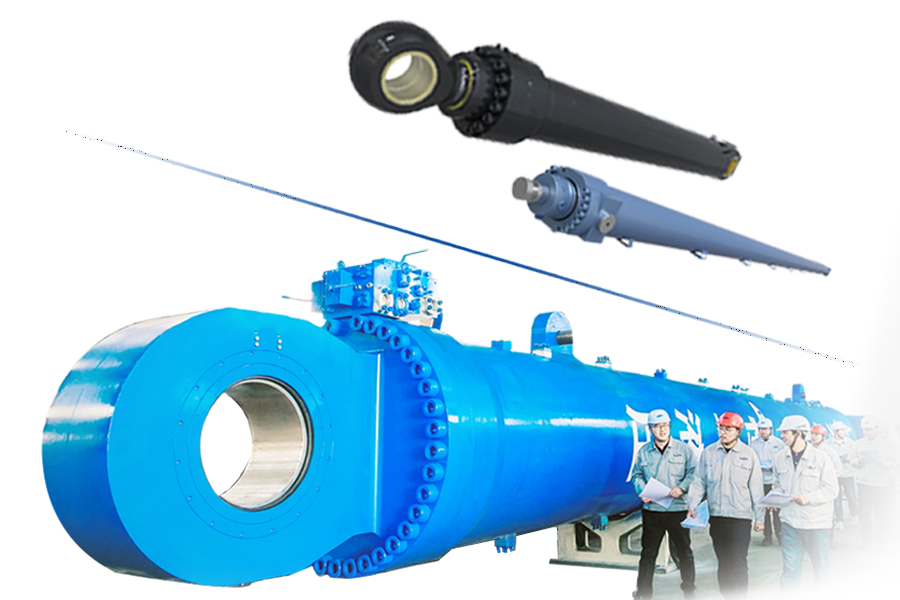
A cylinder quotation is only as good as the data behind it. Before price and lead time can be fixed, four numbers and one interface have to be settled: bore, stroke, rod diameter, working pressure and mounting.
Start from the force, not the bore
Required thrust and pull force come from the load and the lever geometry of the machine. Once the working pressure is known, bore follows from the force. Specifying the bore first and hoping the pressure works out is the most common reason a cylinder is oversized, heavy and expensive.
Stroke and rod diameter
Stroke is set by the travel of the function. Rod diameter follows from the buckling load at full extension: a long stroke with a thin rod will bend before it reaches rated pressure. As a rule, check the rod in compression at maximum stroke rather than at mid-travel.
Mounting interface
Clevis, flange, trunnion or foot mounting all change the load path into the machine frame. Send the pin diameter, the mounting hole pattern and the distance between centres, not just a photo of the old cylinder.
What to include in an enquiry
- Bore, stroke and rod diameter, or the original part number
- Working and peak pressure, duty cycle
- Mounting style with pin or bolt dimensions
- Port size and position, cushioning and sensor requirements
- Fluid viscosity and operating temperature range
With those details a drawing can be confirmed before production, which is what keeps a replacement cylinder from needing rework on site.