
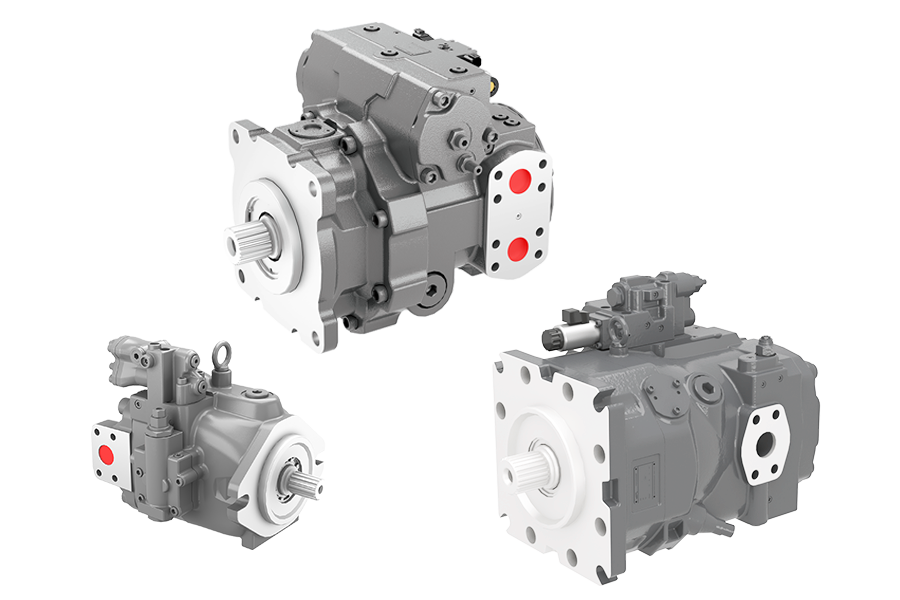
When a replacement pump fails early, the cause is usually upstream: contamination, a blocked suction line or a relief valve that no longer opens. These five checks take an hour and prevent most repeat failures.
1. Flush the circuit
Metal particles from the failed pump stay in the lines, cooler and tank. Flush and replace the filter element before the new pump is installed, otherwise the debris goes straight through it.
2. Check the suction line
A collapsed hose, a blocked strainer or an undersized line causes cavitation that sounds like gravel and destroys the pump in hours. Confirm the suction pressure at the pump inlet under load.
3. Verify the relief setting
A relief valve set too high, or stuck closed, turns every dead-head into a pressure spike above the pump rating. Test it on a bench or with a calibrated gauge before commissioning.
4. Match the control and the drive
Pressure, flow and power controls must match the machine's original setting. A pump supplied with a different control will run, but the machine will behave differently and the pump may run outside its intended envelope.
5. Confirm fluid and temperature
Viscosity grade, water content and oil temperature all affect pump life. Check the fluid against the pump specification and confirm the cooler is working before the machine goes back into service.
Record the settings and the filter change on the machine file — the next replacement will be faster and the failure history becomes traceable.